
Slow Confit Duck Legs with Orange Honey Glaze Recipe
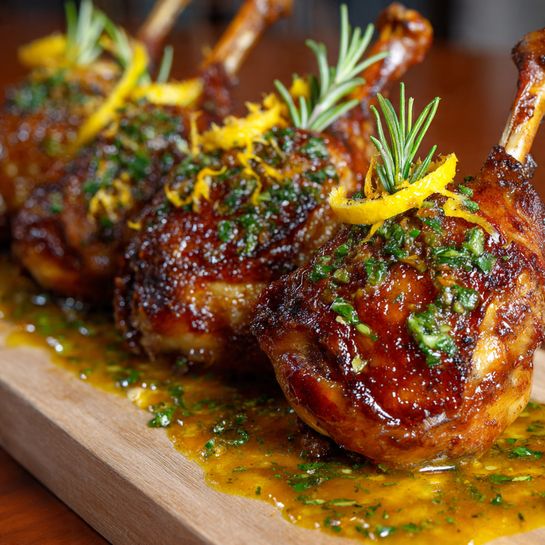
If you have ever dreamed about sinking your teeth into tender, flavorful duck with a perfectly balanced sweet and citrusy touch, then this Slow Confit Duck Legs with Orange Honey Glaze recipe is your new best friend. The magic here lies in the slow cooking process that renders the meat unbelievably soft while the orange honey glaze adds a vibrant, glossy finish, turning every bite into a celebration of rich and bright flavors. Trust me, once you try this, it will be one of those dishes you’ll want to prepare again and again, impressing anyone lucky enough to share your table.
Ingredients You’ll Need
Don’t be intimidated by the list; these ingredients are straightforward yet play vital roles in delivering the succulent taste and beautiful presentation of the Slow Confit Duck Legs with Orange Honey Glaze. Each item brings unique flavor depth, helping you create something extraordinary with simple pantry essentials.
- Duck legs: The star of the dish, providing rich, tender meat perfect for slow cooking.
- Fine salt: Essential for curing the duck, it draws out moisture and deepens flavor.
- Black pepper: Adds a mild heat and seasoning to enhance the meat’s natural savoriness.
- Garlic cloves: Slightly crushed to infuse the duck with subtle aromatics during the curing process.
- Fresh thyme sprigs: Fresh herbs that bring an earthy, slightly floral fragrance.
- Bay leaves: Adds a layer of herbal warmth and complexity.
- Duck fat: The cooking medium that slowly renders the meat tender and rich without drying it out.
- Fresh orange juice: Provides the citrus base for the glaze, bringing brightness to balance the richness.
- Orange zest: Adds concentrated citrus oils for an aromatic punch.
- Honey: A natural sweetener that caramelizes beautifully, giving the glaze a luscious sheen.
- Dijon mustard: Adds a gentle tang and depth, cutting through the sweetness.
- Soy sauce: Brings umami and a slight saltiness to round out the glaze.
How to Make Slow Confit Duck Legs with Orange Honey Glaze
Step 1: Cure the Duck Legs
Start by patting your duck legs dry, then season them evenly with fine salt and black pepper. Layer them in a shallow dish, scatter crushed garlic, fresh thyme, and bay leaves on top, then cover and refrigerate for 8 to 24 hours. This step might feel like extra work, but it’s the secret to intensifying flavor and tenderizing the meat before cooking.
Step 2: Prepare for Confit Cooking
When you’re ready, preheat your oven to a gentle 275°F (135°C). Arrange the cured duck legs snugly in a deep oven-safe dish or Dutch oven. Carefully pour melted duck fat over the legs until they are completely submerged. Cover tightly with foil or a lid to keep all the moisture in.
Step 3: Slow Cook the Duck Legs
Place your preparation in the oven and let it cook slowly for 2½ to 3 hours. This low and slow technique breaks down connective tissue, making the meat incredibly tender and easy to pull apart. You’re aiming for that melt-in-your-mouth texture that’s impossible to rush.
Step 4: Remove and Prepare to Glaze
Remove the duck legs from the fat and place them on a rack set over a baking sheet. Don’t toss that duck fat though—reserve it for other delicious cooking projects like roasting potatoes or confiting garlic.
Step 5: Make the Orange Honey Glaze
Turn your oven up to 425°F (220°C). Meanwhile, in a small saucepan, combine fresh orange juice, orange zest, honey, Dijon mustard, soy sauce, and black pepper. Simmer this mixture over medium heat for 6 to 8 minutes, reducing it slightly until it takes on a thicker, syrupy consistency that will coat the duck beautifully.
Step 6: Glaze and Roast
Brush your duck legs generously with the orange honey glaze and roast them uncovered in the hot oven for 15 to 20 minutes. Halfway through, brush them once more for a glossy, richly caramelized skin with that irresistible crispiness. This final step brings the wonderful contrast of crispy skin and succulent meat alive.
Step 7: Rest and Garnish
Allow the Slow Confit Duck Legs with Orange Honey Glaze to rest for about 5 minutes after roasting. This little pause lets the juices redistribute and the glaze settle perfectly. Finally, garnish with fresh thyme leaves and attractive orange zest curls for a bright, inviting presentation that matches the flavor.
How to Serve Slow Confit Duck Legs with Orange Honey Glaze
Garnishes
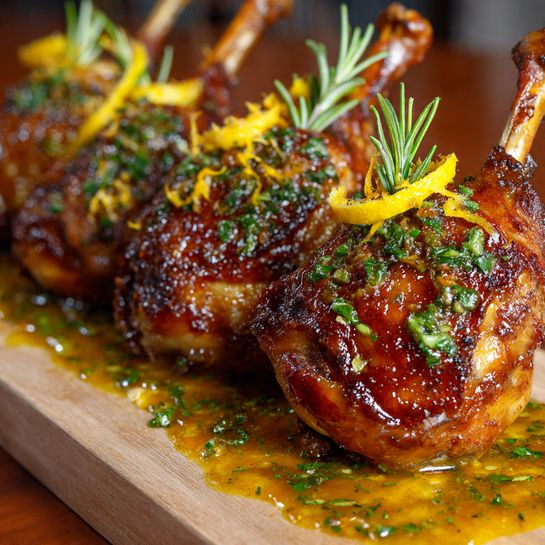
Sprinkling fresh thyme or savory herb leaves over your finished duck legs adds lovely aromatic notes and earthy color. Orange zest curls are not only visually appealing but also provide a burst of concentrated citrus fragrance with each bite, complementing the glaze beautifully.
Side Dishes
This dish pairs wonderfully with silky mashed potatoes or a creamy parsnip puree, which soak up the rich duck juices. Roasted root vegetables or a light fennel and arugula salad with a lemon vinaigrette also make refreshing and crisp companions to balance the richness of the duck.
Creative Ways to Present
For a touch of elegance, serve your Slow Confit Duck Legs with Orange Honey Glaze atop a bed of wild rice or couscous mixed with toasted nuts and herbs. Drizzle extra glaze artistically on the plate and finish with microgreens or edible flowers to turn your dinner into a feast for the eyes as well as the palate.
Make Ahead and Storage
Storing Leftovers
Leftover duck legs can be stored in an airtight container in the refrigerator for up to 3 days. To maintain their flavor and texture, keep them separate from the glaze and add fresh glaze when reheating.
Freezing
You can freeze cooked duck legs by wrapping them tightly in plastic wrap and then in foil or placing them in a freezer-safe container. They stay good for up to 2 months. Defrost overnight in the fridge before reheating to preserve that tender texture.
Reheating
Reheat your duck legs gently in a low oven at 300°F (150°C), allowing the meat to warm through without drying out. When nearly heated, brush on fresh orange honey glaze and briefly broil or roast at high heat to revive the crispy skin and caramelized finish.
FAQs
Can I make Slow Confit Duck Legs with Orange Honey Glaze without curing them overnight?
Yes, you can skip the curing step, but allowing the duck to cure enhances both the flavor and texture significantly. If short on time, seasoning just before cooking will still give you a delicious result.
What if I don’t have duck fat for confit?
Duck fat is ideal because it imparts flavor and the perfect cooking environment, but you can substitute with a mixture of vegetable oil and butter. Keep in mind that duck fat’s unique richness cannot be fully replicated.
Is the orange honey glaze too sweet? Can I adjust it?
The glaze is balanced with acidity from the orange juice and a tang from mustard and soy sauce. You can reduce the honey slightly if you prefer a less sweet finish without losing the glaze’s characteristic brightness.
Can I cook this recipe on the stovetop instead of the oven?
Slow confit is traditionally done in the oven for even heat, but you can confit on very low heat on the stove in a heavy pot. Just be sure to maintain a gentle simmer and not let the fat bubble aggressively to avoid overcooking.
How do I know when the duck legs are done?
The duck legs are perfectly cooked when the meat is tender enough to easily pull away from the bone with little resistance. The slow cooking process allows connective tissue to break down, resulting in silky smooth texture.
Final Thoughts
Making Slow Confit Duck Legs with Orange Honey Glaze is like gifting yourself an unforgettable meal that marries melt-in-your-mouth tenderness with zesty, sweet finish. It takes some time, but every minute invested brings you closer to restaurant-quality elegance in your own kitchen. Give it a try and enjoy the proud satisfaction of sharing something truly special with friends and family.