Rustic Mediterranean Bread and Hummus Board Recipe
If you’re craving a vibrant, fresh, and utterly satisfying spread that brings together the rich, earthy flavors of the Mediterranean, then the Rustic Mediterranean Bread and Hummus Board is exactly what you need. This dish is a joyous celebration of wholesome ingredients like creamy hummus, fragrant spices, crunchy veggies, tangy olives, and crusty rustic bread that invites sharing and lingering conversations. Perfect for casual gatherings, a light lunch, or a colorful appetizer, this board balances texture and flavor beautifully and is guaranteed to become a favorite at your table.

Ingredients You’ll Need
Every ingredient in this Rustic Mediterranean Bread and Hummus Board plays an essential role in crafting its bold and harmonious flavors. From the silky smoothness of the hummus to the refreshing crunch of fresh vegetables, each component adds a distinct texture and taste that makes this dish delightfully irresistible.
- Chickpeas (1 can, 15 oz): These form the creamy base of the hummus and are packed with protein and fiber.
- Tahini (3 tablespoons): Adds a rich, nutty flavor that complements the chickpeas perfectly.
- Lemon juice (2 tablespoons): Brightens the hummus with a fresh, tangy zing.
- Olive oil (2 tablespoons for hummus, plus extra for drizzling): Brings a luscious texture and authentic Mediterranean aroma.
- Garlic (2 cloves, minced): Imparts a subtle kick and depth to the hummus.
- Ground cumin (½ teaspoon): Adds a warm, aromatic earthiness.
- Salt (½ teaspoon): Enhances all the natural flavors.
- Cold water (2–4 tablespoons): Used sparingly to adjust hummus consistency for creaminess.
- Rustic Mediterranean bread loaf: Thick slices of sourdough or country bread provide a chewy, crusty base perfect for dipping.
- Cherry tomatoes (½ cup): Bring juicy bursts of sweetness and vibrant color.
- Cucumber (1, sliced): Adds refreshing crunchiness and coolness.
- Kalamata olives (½ cup): Offer salty, briny complexity.
- Roasted red peppers (½ cup): Deliver smoky sweetness and tender texture.
- Feta cheese (¼ cup, crumbled): Provides creamy saltiness with a tangy finish.
- Marinated artichoke hearts (¼ cup): Contribute a subtly tangy and earthy bite.
- Paprika or sumac (1 teaspoon): Sprinkled on top for a hint of spice and vibrant color.
- Fresh parsley (2 tablespoons, chopped): Brightens the board with fresh herbaceous notes.
- Lemon wedges: For squeezing over everything to add a zesty lift.
How to Make Rustic Mediterranean Bread and Hummus Board
Step 1: Whip Up the Creamy Hummus
Begin by adding your drained and rinsed chickpeas, tahini, lemon juice, olive oil, minced garlic, ground cumin, and salt into a food processor. Blend these together until silky smooth, gradually incorporating cold water one tablespoon at a time to achieve a luscious, creamy texture. This hummus should be thick enough to hold its shape on your board but soft enough for easy scooping.
Step 2: Adjust the Flavors
Give your hummus a taste test and tweak the seasoning if needed. A little extra salt or an added splash of fresh lemon juice can brighten the flavors, turning your homemade spread into a perfect balance of savory and tangy.
Step 3: Prepare the Rustic Bread
Slice your rustic Mediterranean bread into thick, hearty pieces that will hold up to heavy dips and toppings. For an added tasty crunch, pop these slices into a preheated oven at 180°C (350°F) for about 5 minutes—this also unlocks a toasted aroma that pairs wonderfully with the hummus.
Step 4: Plate the Hummus
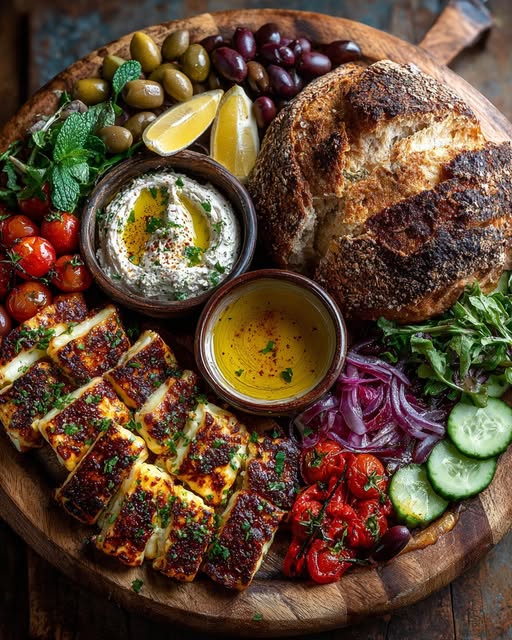
Spoon your creamy hummus onto a shallow serving dish or bowl placed right in the center of your board. Drizzle it generously with olive oil, then sprinkle paprika or sumac and chopped parsley over the top for pops of color and subtle spice.
Step 5: Assemble the Board
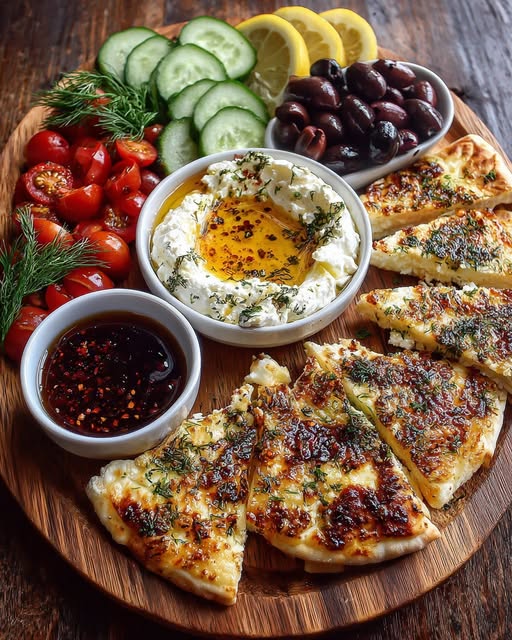
Now comes the fun part—arranging the bread slices around your hummus centerpiece and artistically placing cherry tomatoes, cucumber slices, Kalamata olives, roasted red peppers, crumbled feta, and marinated artichoke hearts all around. This makes for a colorful, inviting presentation that tempts everyone to dig in.
Step 6: Ready to Serve
Finally, add lemon wedges around the board for guests to squeeze over their veggies and hummus. Serve immediately to enjoy the freshness and variety of textures at their very best.
How to Serve Rustic Mediterranean Bread and Hummus Board

Garnishes
To elevate the look and flavor of your board, fresh herbs like chopped parsley are a must. Paprika or sumac not only add vibrant red color, but they also bring a delicate smoky or tangy nuance. A drizzle of high-quality olive oil on top of the hummus adds a silky sheen and a fruity finish. Lemon wedges are essential—they provide a bright, citrusy kick that balances out the creamy and savory elements perfectly.
Side Dishes
This Rustic Mediterranean Bread and Hummus Board pairs beautifully with simple side dishes like a fresh garden salad or grilled vegetables. If you want to turn it into a full meal, serve alongside roasted lamb skewers or a cold mezze platter featuring tabbouleh and stuffed grape leaves for a truly authentic Mediterranean feast.
Creative Ways to Present
Get creative by layering ingredients vertically or incorporating small bowls of olives, nuts, or pickled vegetables for added texture and visual interest. Using a large wooden board or rustic ceramic platter complements the hearty, homemade vibe. For an elegant touch, sprinkle edible flowers or finely chopped mint over the hummus. A set of colorful small serving spoons or spreaders can encourage everyone to share and explore the variety of flavors.
Make Ahead and Storage
Storing Leftovers
If you have any leftovers from your Rustic Mediterranean Bread and Hummus Board, store the hummus separately in an airtight container in the fridge for up to 4 days. Keep the bread wrapped tightly in foil or plastic wrap to maintain its crusty texture, although it’s best enjoyed fresh.
Freezing
You can freeze homemade hummus for longer storage. Place it in a freezer-safe container and freeze for up to 3 months. When ready to eat, thaw it slowly in the refrigerator overnight and stir well before serving. The bread and fresh veggies do not freeze well, so it’s best to prepare those fresh.
Reheating
If you toasted the bread beforehand, simply pop the slices in the oven for a few minutes at 180°C (350°F) to refresh the crispness. The hummus is best enjoyed cold or at room temperature, so avoid reheating it as this can alter the creamy texture and flavor.
FAQs
Can I use dried chickpeas instead of canned?
Absolutely! Just be sure to soak and cook dried chickpeas until tender before making your hummus. This can enhance flavor and texture but requires extra prep time.
What can I substitute for tahini if I don’t have any?
If you don’t have tahini on hand, try using natural peanut butter or almond butter for a slightly different, but still delicious, nutty flavor. However, tahini provides the classic creamy sesame taste.
Is the Rustic Mediterranean Bread essential or can I use other types?
While rustic Mediterranean bread or sourdough is ideal for its sturdy crumb and tangy flavor, you can also use pita bread, baguette slices, or even crunchy crackers based on your preference.
Can I make this board vegan?
Yes! Simply omit the feta cheese or substitute it with vegan-friendly alternatives or marinated tofu to maintain texture and flavor.
How can I make the board more kid-friendly?
Focus on mild flavors and familiar vegetables like cucumber and cherry tomatoes. You might also include hummus variations such as roasted red pepper or plain for kids to enjoy. Cutting bread into small, fun shapes can be a hit too.
Final Thoughts
Nothing beats the warmth and convivial spirit of a Rustic Mediterranean Bread and Hummus Board when you want to gather loved ones and share simple, wholesome pleasures. Its combination of fresh veggies, creamy hummus, and hearty bread makes every bite a celebration of Mediterranean goodness. Trust me, once you try building this colorful board, it will quickly become a go-to for casual get-togethers or anytime you crave naturally delicious, comforting food.